
Tips for Airport Transfers When Traveling with Pets
An airport transfer with a pet is not a standard booking. The animal's presence affects vehicle type, driver preference, space requirements, and animal welfare during the journey. Specifying this in advance — not at the pickup point — ensures the right arrangements are in place before you arrive.
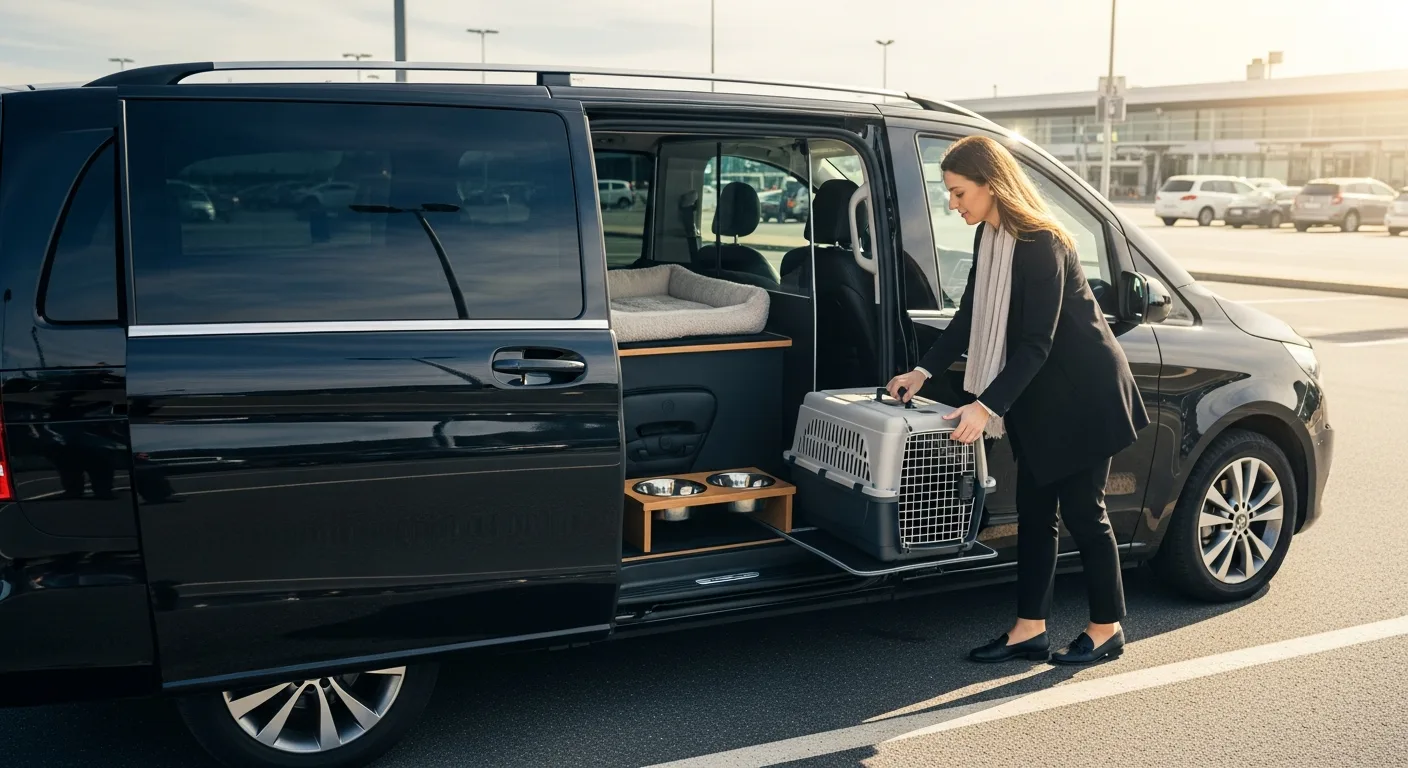
Why Pet Bookings Must Be Declared in Advance
Some drivers are allergic to pet hair. Some vehicles are premium-interior vehicles where the operator has a policy against animals. Some transfer services require advance notice to confirm pet acceptance and assign an appropriate vehicle. Arriving at a pickup with an undeclared dog or cat creates a problem that cannot be resolved on the spot — the driver may be unable to accept the animal, and finding an alternative vehicle at the airport is unpredictable.
Declaring a pet as part of your booking — with species, carrier dimensions, and whether the animal will be in the cabin or boot area — is the equivalent of declaring luggage count. It shapes the booking and ensures what you need is available when you arrive.
What to Specify in the Booking
A small cat in a soft carrier has very different space requirements than a large dog that travels in a rigid airline-approved crate. Specify the animal type and its approximate carrier or crate dimensions.
Soft carriers can be compressed and placed in a variety of positions. Rigid crates require specific space, typically in the boot, and need to be stable during travel. Confirm the carrier dimensions against the vehicle's boot space.
Smaller animals in soft carriers can often travel in the passenger cabin on the seat beside the owner. Larger animals in rigid crates typically travel in the boot with the boot door down or in a van-type vehicle. Specify your preference.
Explicitly noting "traveling with a [animal type] in a [carrier type]" in the booking notes ensures this information reaches the driver before they are dispatched. No surprises at the pickup point benefits both the driver and the animal.
Vehicle Selection for Pet Travel
For small animals in soft carriers, a standard sedan may be sufficient if the carrier fits in the passenger cabin or boot. For medium or large dogs in rigid crates, an SUV or minivan with a flat rear floor is usually necessary. The vehicle must provide enough space for the crate to be placed securely — a crate sliding around in the boot during the journey is uncomfortable for the animal and potentially damaging to the vehicle.
The guide on when a minivan is better covers the vehicle capacity considerations that apply when luggage or special items — including pet carriers — exceed sedan capacity.
Never assume that a confirmed transfer booking accepts pets by default. Pet acceptance must be explicitly confirmed at the time of booking — not assumed from the service's general terms. Confirmation protects both you and the driver from a mismatch at pickup.
Animal Welfare During the Transfer
Animals that can hear or see their owner during a transfer are generally calmer. If the carrier is in the boot or rear of a van, position it so the animal is not completely isolated. A visible owner or familiar scent helps reduce stress.
Ensure the vehicle's climate control is set to a moderate temperature — not too warm for an animal in a carrier. Request that the driver not run the AC at maximum cold if traveling with a smaller animal. Ventilation should be consistent throughout the journey.
For longer transfers (over 45 minutes), have water accessible for the animal. A small travel bowl and a bottle in the cabin means you can offer water at any stop or upon arrival without rummaging through the boot.
At loading, confirm the crate or carrier is stable and won't shift during the journey. In a boot or van rear, use available tie-down points or position the crate against a fixed surface. An unsecured crate in a moving vehicle is a welfare and safety risk.
After the Transfer: Vehicle Condition
Animals leave fur, dander, and sometimes odor in vehicles. It is courteous and sometimes contractually required to ensure the animal's carrier is securely closed and that any shedding is contained within the carrier as much as possible. Some services charge a cleaning fee for vehicles that require deep cleaning after pet transport — check whether this applies in the booking terms.
Reviewing your booking checklist specifically in the context of pet travel ensures you've covered the carrier dimensions, vehicle type, driver notification, and any fee implications before confirming the booking.
To explore Transferhood directly, you can visit the main platform.