
How to Handle Luggage Efficiently During Airport Transfers
Luggage handling during a transfer affects loading speed, vehicle space, and whether your items arrive intact. A few simple habits — applied at both pickup and dropoff — make the difference between a smooth handoff and a chaotic one.
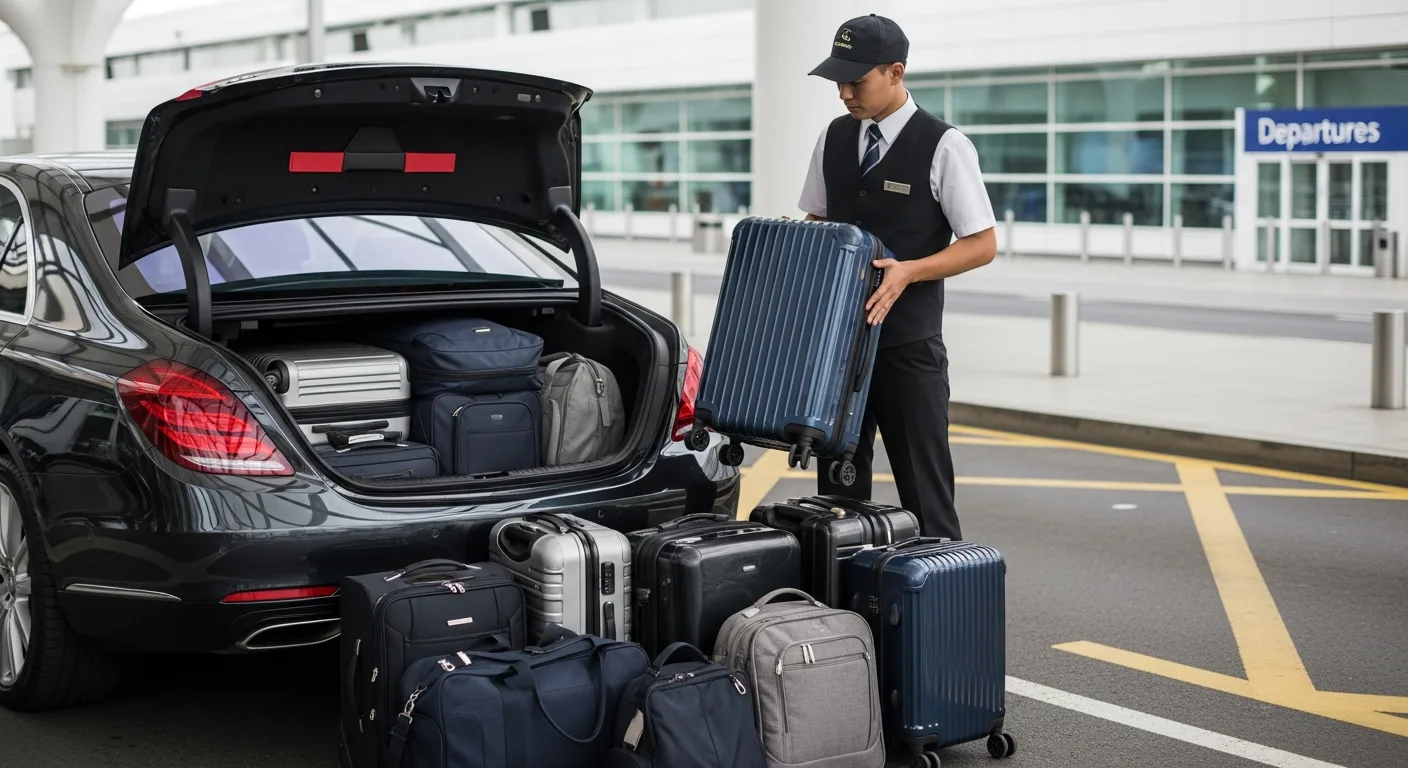
What Efficient Luggage Handling Actually Looks Like
Efficient luggage handling in a transfer context means: bags are loaded in an order that makes unloading logical, the right items are accessible in the cabin rather than buried in the boot, fragile items are protected, and the total volume matches what was declared in the booking. None of this is complex — but it requires thinking about it before you're standing at the curb with a driver and four bags in front of you.
Luggage-related issues are also why accurate luggage details in the booking matter. A driver dispatched in a sedan for a passenger arriving with four large suitcases cannot load them all — this situation is fully preventable.
Boot Loading: Order and Positioning
The last bag loaded is the first accessed. Load bags you won't need immediately deepest in the boot. Your most important bag — the one with essentials — should be loaded last and positioned nearest the boot opening.
Rigid suitcases should lie flat in the boot base. Soft bags can be compressed and layered over them. Placing a heavy bag on top of a soft case risks crushing contents and makes unloading harder.
In larger boots, suitcases can often stand upright, which preserves more space. In smaller boots, flat stacking is the only option. The driver will know the vehicle's optimal configuration — follow their lead.
Forcing bags that don't fit into a boot damages both the bags and the vehicle. If your luggage count was accurate in the booking, the right vehicle will have been dispatched. If you're struggling to fit bags, there's likely a booking mismatch.
What to Keep in the Passenger Cabin
The passenger cabin should hold only what you actively need during the journey or immediately upon arrival. The default set of items for cabin access is: phone, travel documents (passport, hotel confirmation), wallet, keys, and a small personal bag. Everything else belongs in the boot.
Overfilling the cabin creates discomfort on a long transfer and makes bags harder to retrieve at the dropoff point. A cluttered cabin also creates a security consideration — multiple bags spread across seats makes it easy to leave one behind when exiting quickly.
Before closing the vehicle door at dropoff, do a quick scan: phone in hand, bag on shoulder, nothing left on the seat or floor. A 5-second check prevents the much longer problem of recovering a left-behind item from a driver who has already moved on to the next job.
Handling Fragile Items
Electronics, glassware, ceramics, and any breakable items should travel in the passenger cabin where you can control them. The boot is not designed for fragile items — road vibration and luggage shifting during the journey can cause damage regardless of packing.
If a fragile item must go in the boot due to size, tell the driver explicitly: "This bag has glassware, please load it upright." Drivers respond to clear information — they cannot be expected to guess which bags need special treatment.
Flight packing and transfer packing have different pressures. A delicate item wrapped in clothing for flight may shift in the boot during road travel. Consider additional padding or a dedicated rigid case for items that need to survive both journeys.
Group Transfers: Coordinating Multiple Passengers' Bags
When multiple passengers travel together, luggage coordination at pickup requires brief organization before loading. Each person should identify their bags clearly and load them together — rather than each person passing bags to the driver individually without a coordinated sequence. This keeps the loading fast and ensures no bag is missed.
For groups traveling in a single vehicle, the passenger count should have informed the vehicle selection. A group of four with four large suitcases and four carry-ons requires a minivan or large SUV — not a sedan, regardless of the passenger count alone.
At Dropoff: A Systematic Exit
- Allow the driver to unload the boot while you gather cabin items — don't try to do both simultaneously
- Count your bags as each one comes out of the boot — confirm you have the correct total before the driver closes the boot
- Check the passenger cabin before exiting — look under seats and on the door pockets
- Confirm your booking receipt has been received (if applicable) before the driver departs
- If you're unsure about anything — a bag count that doesn't match, an item you can't locate — resolve it before the vehicle moves away
To explore Transferhood directly, you can visit the main platform.