
How Airport Construction and Pickup Zone Changes Affect Transfers
Airports undergoing expansion or renovation regularly close pickup zones, reroute access roads, and move arrivals exits temporarily. These changes rarely reach travelers with adequate advance notice — and they create direct coordination problems for airport transfers.
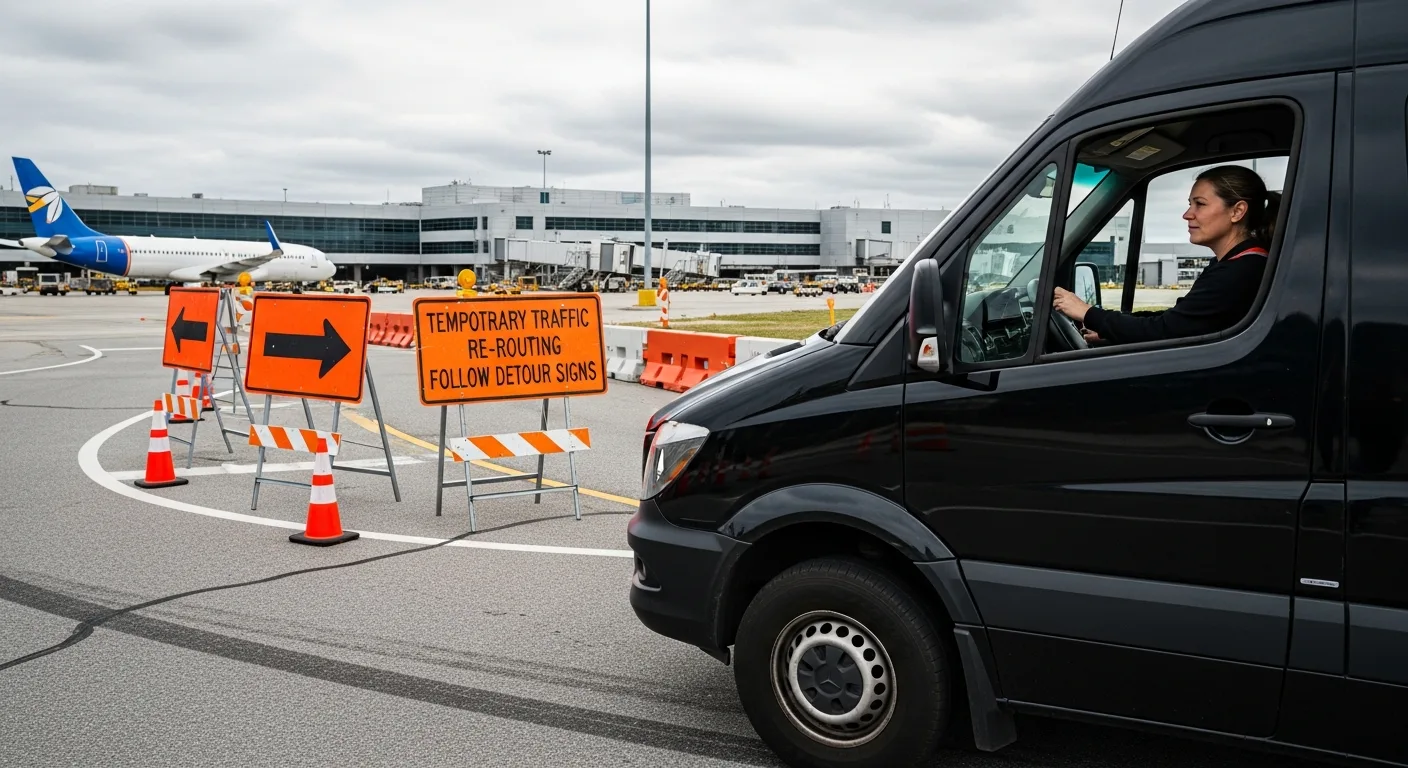
What Airports Change During Construction
Airport construction projects — new terminals, expanded concourses, upgraded road systems — generate a chain of temporary changes that affect ground transport. The most disruptive from a transfer standpoint are modifications to the zones where vehicles stage and passengers are met.
Private hire pickup zones may move to temporary locations further from the arrivals exit, adding walking distance and causing confusion when driver and passenger are at different locations.
Construction may close the standard approach road to a terminal. Drivers using alternative routes face longer journey times and risk arriving at the staging area later than expected.
Regular exits may be closed and temporary exits opened, routing passengers to a different door. Name board pickup coordination fails if the driver is at the old exit point.
Permanent signage may be obscured by hoardings. Temporary boards are less clear. Passengers unfamiliar with the airport are more likely to get disoriented in construction zones.
Why This Creates Transfer-Specific Problems
Transfer drivers rely on consistent staging zones and known meeting points. When construction moves the private hire zone, changes the traffic flow on the approach road, or redirects passengers to a new exit, a driver operating on outdated information will be in the wrong place.
Unlike a passenger who can follow on-the-ground signage after landing, a driver must be at the correct location before the passenger arrives. There's no "follow the signs" option at the staging stage — the driver needs current operational knowledge before entering the airport approach. Good airport pickup operations require exactly this kind of current-state awareness.
This is particularly acute at airports that recently opened new terminals. Operational zones for a new terminal differ entirely from what existed before — staging locations, access roads, and meeting points are all new. If your airport opened a new terminal in the past 18 months, verify all pickup zone information rather than relying on prior experience.
What Travelers Can Do
Most airports publish ground transport notices under "Ground Transport" or "Private Hire" sections. Check 24 to 48 hours before travel for any pickup zone or road changes.
Ask specifically whether the pickup zone has changed recently. A professional service tracks current staging locations. This matters especially if you haven't used the airport in 6 or more months.
If construction has placed driver and passenger at different points, a quick call resolves it in minutes. A reachable number — with roaming active — is the simplest contingency.
Temporary "Private Hire" and "Pre-Booked Vehicles" signs inside the terminal show the current pickup zone. Follow these rather than heading to where you remember the zone being from a previous visit.
How Professional Services Manage Construction Changes
Well-run transfer services monitor airport operational notices and update driver briefings when pickup zones change. Drivers who operate regularly at the same airports maintain current knowledge through daily experience. This operational attentiveness is also how services track flight delay monitoring changes — the same systems that track flight status also surface airport operational notices.
For airports in active construction, services may adjust driver dispatch timing to account for longer access road routes and change the named meeting point in booking confirmations proactively. This is part of the value of booking through an established platform rather than an unfamiliar one-off provider.
What to Check When Returning After a Gap
- Whether your terminal's pickup zone has relocated
- Whether the access road approach you remember is still open
- Whether the arrivals exit location has moved temporarily
- Whether your transfer confirmation shows updated meeting instructions
- What current airport signage says for private hire vehicles — follow that, not memory
These checks take less than 5 minutes and prevent the scenario of driver and passenger searching for each other in a reconfigured forecourt. They're a standard part of why structured planning matters for airport transfers.
To explore Transferhood directly, you can visit the main platform.