
How the Transfer Experience Differs Between Business and Leisure Trips
The same airport, the same transfer service, the same route — but a completely different experience depending on why the traveler is there. Trip purpose shapes what matters, what's noticed, and what constitutes a good outcome from the passenger's seat.
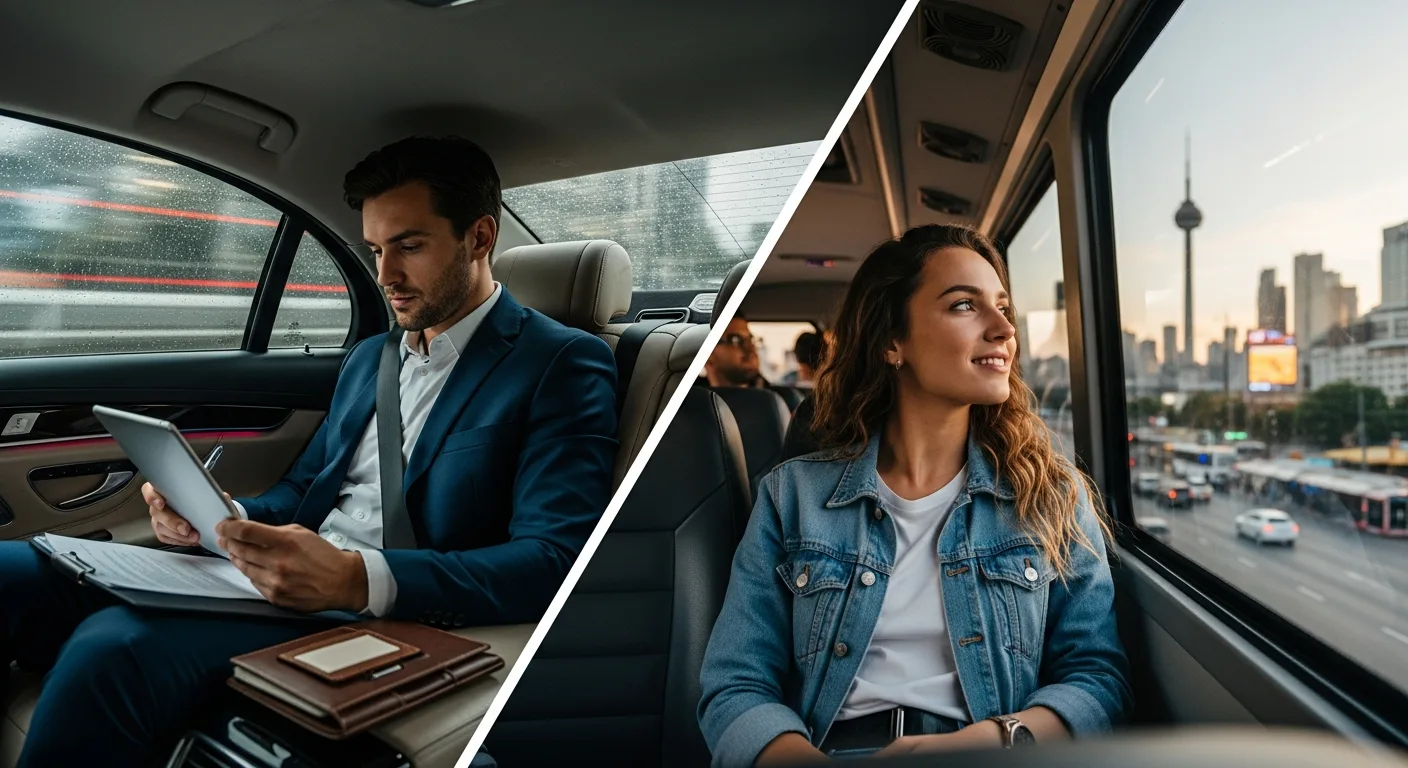
Different Travelers, Different Needs
Business travelers arrive focused on what comes next. The transfer is not the event — it's the transition between the flight and the meeting, the hotel check-in, or the client dinner. They need it to be invisible: smooth, fast, quiet, on time. Any friction that requires attention is a problem because attention is already allocated.
Leisure travelers are often in a different mental state. They've arrived somewhere they chose to be, and the journey from the airport — including the transfer — is part of the experience of getting there. They may be more interested in the city passing by, more relaxed about timing, and more focused on comfort for the full party rather than individual efficiency.
What Each Traveler Type Prioritizes
Business traveler
- On-time pickup without uncertainty
- Quiet, professional environment
- Fast route, no unnecessary stops
- Pre-confirmed price
- Driver who reads cues correctly
- Ability to work or prepare during ride
Leisure traveler
- Enough space for all luggage and passengers
- Driver who can answer city questions
- Comfortable, unhurried atmosphere
- Flexibility if schedule isn't fixed
- Appropriate for group or family travel
- Transparent pricing without surprises
The Luggage Dynamic
One of the clearest practical differences is luggage. A business traveler on a two-day trip typically has a carry-on and a briefcase — one person's worth of bags, compact and manageable. A family of four on a holiday has four check-in bags, a pushchair, possibly sports equipment, and everyone's carry-on as well.
This changes the vehicle requirement significantly. The business traveler can use a standard sedan without issue. The family needs a vehicle where luggage space is generous enough that no one sits with bags on their lap for 45 minutes. Getting this wrong for a leisure group is a comfort failure from the first minute of the journey.
The vehicle matching logic is different for these two traveler types — not just in class, but in configuration. A minivan is not a premium upgrade for a family; it's the correct vehicle. A standard sedan is not a downgrade for a solo business traveler; it's exactly right. Matching vehicle type to traveler profile is a specification skill, not a price decision.
Communication Style and Expectations
Business travelers typically prefer a driver who confirms the essentials and then lets the journey be quiet. Leisure travelers, especially first-time visitors, often appreciate a brief orientation — "this is the financial district on your left, we'll reach the center in about 20 minutes" — which a business traveler on their 40th visit to the same city would find irrelevant.
A skilled driver reads these cues. A service that allows note-passing at booking — "passenger is visiting for the first time" or "this is a business trip" — allows the driver to calibrate without having to probe the passenger for context.
What They Share
To explore Transferhood directly, you can visit the main platform.