
How Airport Transfers Shape the First Impression of a New City
The journey from the airport to the hotel is often the first real encounter with a new city — not the highlights reel, but the actual roads, driving pace, skyline, and human atmosphere. How smoothly that journey unfolds shapes how the city registers before any deliberate exploration begins.
The Arrival Window
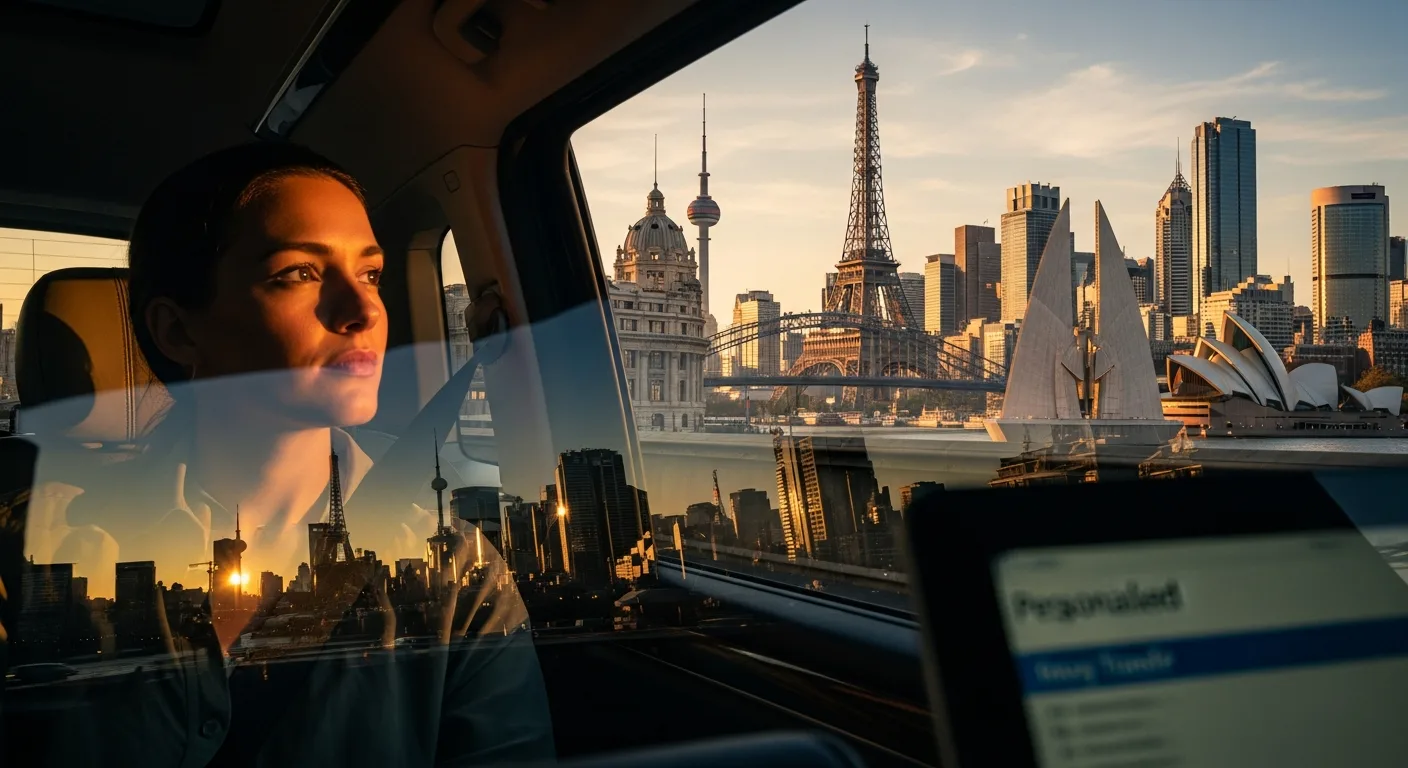
Between clearing customs and reaching the hotel, there's a window of 20 to 60 minutes in which the traveler is simultaneously managing logistics and receiving their first impressions of the city. This window is unlike any other period of the trip — it's unscheduled, unfiltered, and happening whether or not the traveler is paying deliberate attention.
The transfer experience frames what arrives through the window. A calm, smooth transfer allows genuine attention to the city — the architecture, the density, the pace of traffic, the light. A stressful transfer, with confusion at pickup and uncertainty about the route, directs all cognitive attention inward, toward logistics. The city passes by unseen.
What Travelers Absorb Without Noticing
- 1The driving culture
Congested and aggressive, or open and measured? The road experience in the first 10 minutes of arrival is a strong proxy for how the city will feel to navigate.
- 2The scale of the city
How long is the drive? What's the density of the built environment? How many layers does the city have between the airport periphery and the center?
- 3The skyline or absence of one
Whether the city announces itself visually — towers, waterways, historic landmarks visible from the elevated road — or reveals itself gradually through street level.
- 4The ambient light and atmosphere
Arriving at dusk in a city with lit boulevards is a completely different first impression than arriving on a grey weekday morning into industrial outskirts.
When the Transfer is Stressful, the City Disappears
A traveler who spends the first 45 minutes of an arrival managing a pickup confusion, calling a driver who doesn't speak a common language, and then navigating payment disputes, arrives at the hotel having absorbed nothing of the city at all. Their first impression is of the airport and the stress — not of where they've come to.
This matters beyond aesthetics. For business travelers arriving in cities they'll need to navigate over several days, the arrival transfer is often the first orientation — the first sense of distances, of landmarks, of which direction is which. A smooth transfer provides this orientation passively. A difficult one forecloses it.
The Experience Depends on the Driver Too
Can point out a landmark, mention the neighborhood, or simply confirm "we're about 15 minutes from the center now." This costs nothing but adds significant orientation value for a first-time visitor.
Knows the destination without necessarily knowing the city. The route is correct, but the contextual layer is absent. Still professional — but the experience is thinner.
Setting Expectations for the Rest of the Stay
First impressions of a city create anchoring effects. A traveler who arrives with calm, confident orientation — "the city feels navigable, well-organized, manageable" — approaches the next three days differently than one who arrives with a sense that things are confusing and unpredictable. The transfer, as the first operational experience, contributes to one or the other framing.
This is one reason why the right transfer sets the right pace for the entire trip — not just the first hour. The experience radiates forward. A transfer that provides calm, clear, efficient arrival in a new city has given the traveler something worth more than just the ride.
For travelers arriving on business, the additional consideration is that the hotel or venue is often the first meeting location. Arriving composed and on time — conditions made more likely by why pre-booking helps — reflects immediately on the first impression made in the city, not just of the city.
To explore Transferhood directly, you can visit the main platform.