
How to Navigate Large Hub Airports for a Smooth Transfer Pickup
Large hub airports are operationally complex for arriving passengers. Long walks from gate to exit, multiple arrivals halls, signage in several languages, and high passenger volumes all slow the path from aircraft door to the transfer vehicle. This guide covers the navigation factors that determine how quickly and reliably the pickup happens.
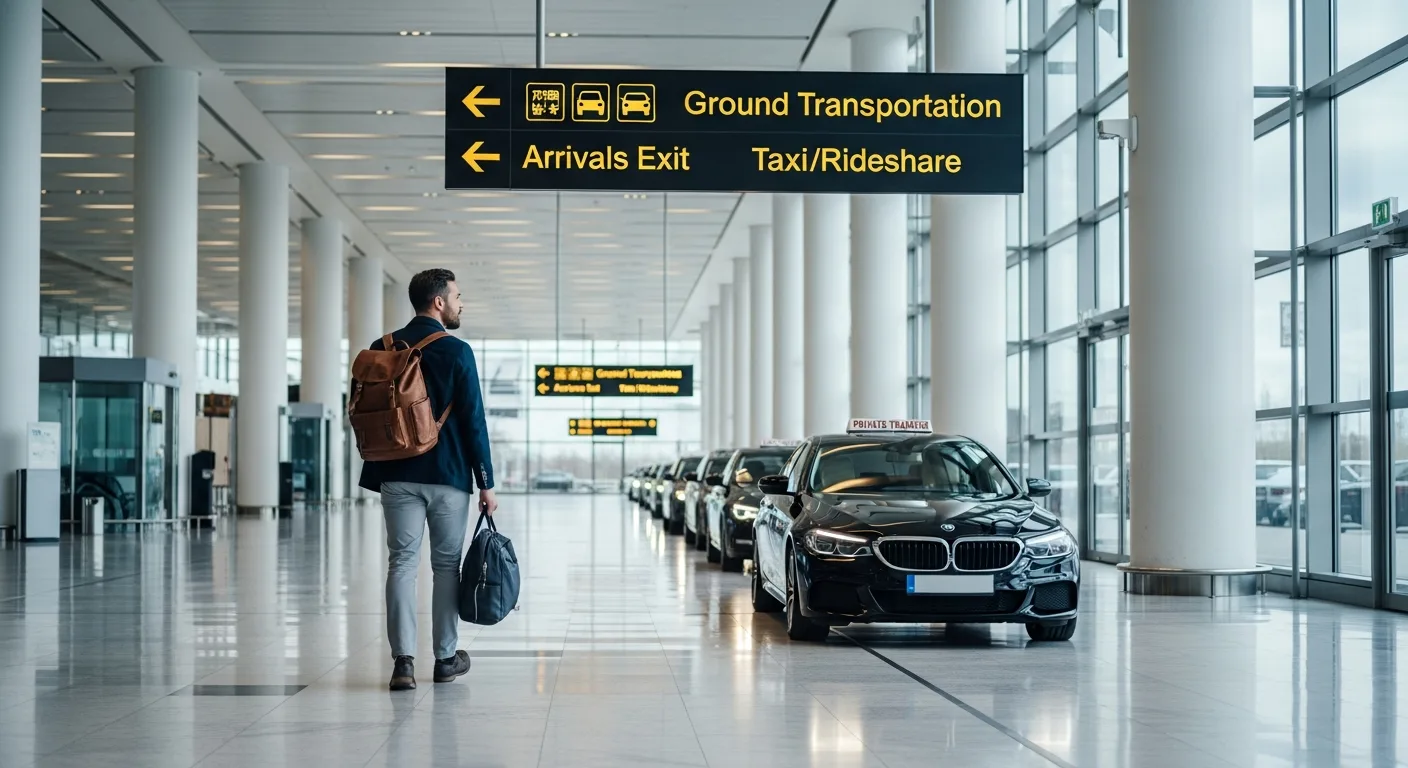
What Makes Hub Airports Difficult to Navigate
Hub airports are designed to process high volumes of connecting passengers — the physical layout prioritizes connection flow, not exit speed for terminating passengers. This means long gate corridors, multiple levels, transit systems between concourses, and arrivals halls that may be far from where you would logically expect them.
For transfer pickup coordination, the relevant navigation path is from your arrival gate to the specific arrivals exit where your driver is staged. At a large hub, this path can take 20 to 40 minutes including passport control and baggage claim — even with efficient movement.
Airport-Specific Navigation Factors
T5B and T5C satellite buildings require an underground automated transit back to T5A. Walk from a remote T5 gate to the T5 arrivals exit: 20+ minutes. T4 requires a longer road approach.
T1's circular design causes first-time visitors to loop past exits. T2E is massive — baggage claim to exit is 10 to 15 minutes of walking. T2G requires a bus connection to reach the main zone.
The mega-terminal's concourses extend far from the central hub. Gate-to-immigration can involve 15 minutes of walking before queuing even starts. Some concourses have moving walkways; not all do.
T3 is enormous — Concourse A gates at the far end require the automated aerotrain to reach the main T3 building. This adds 10 to 15 minutes before immigration. Immigration queues can be long.
Hall B non-Schengen arrivals have a long immigration hall. The combination of walking from distant gates plus queue time makes FRA one of the slower airports for exit. Build 45 to 55 minutes from landing.
The long terminal building means distant piers (E, F) require significant walking to reach the central arrivals exits 1 and 2. Schengen arrivals from piers B/C are faster — 15 to 20 minutes from landing.
How to Navigate to the Arrivals Exit Efficiently
Every major hub has consistent "Arrivals" or "Exit" signage from the gate area. Follow these signs — do not take shortcuts into transit or connection areas, which lead in the wrong direction.
At airports with automated transit (LHR T5, DXB T3, FRA between terminals), these are mandatory parts of the exit path — not shortcuts. Follow signs for the correct transit direction (arrivals vs connections).
Do not look for your driver before clearing immigration. Your driver is airside-restricted — they cannot be in the immigration queue area. Clear customs first, then proceed to the public arrivals hall.
After clearing customs, text or call your driver before exiting to baggage claim. This allows the driver to start moving to your specific arrivals exit, reducing wait time at the door.
What the Driver Needs to Know
For large hub airports, providing your driver with your flight number and airline is the minimum — but providing the specific terminal, concourse, or arrivals exit number improves positioning accuracy. Your driver cannot see which exit you'll emerge from until you emerge. The information you provide at booking, combined with flight delay monitoring, tells them when to position and approximately where.
At airports where meet and greet service is available inside the arrivals hall, navigation complexity for the passenger is reduced significantly — the driver is already past the exit point, waiting with a name board inside the hall rather than at the outer vehicle zone.
The Navigation Factors That Affect Transfer Pickup Efficiency
- Gate distance to immigration: longer at satellite concourses and remote gates
- Immigration queue length: variable by time, origin country, and number of arriving flights simultaneously
- Baggage claim speed: international long-haul has longer baggage delivery cycles
- Exit door clarity: multi-exit arrivals halls can send passengers to the wrong vehicle zone
- Driver communication: a quick message from the arrivals hall reduces final coordination time
Understanding these factors is part of the broader context of airport pickup operations — the end-to-end process from flight landing to vehicle departure.
To explore Transferhood directly, you can visit the main platform.