
Amsterdam Schiphol: Transfer Pickup Zone and Arrivals Guide
Schiphol is one integrated terminal building — there are no separate terminals to specify. However, it has four distinct arrivals exits, each with its own pickup zone, and knowing which one your flight uses makes the difference between an immediate connection and a 20-minute walk across the building.
How Schiphol's Single Terminal Works
Amsterdam Airport Schiphol operates from a single large terminal building — there is no Terminal 1 or Terminal 2 distinction. All passengers arrive at and depart from the same structure, which is divided internally into piers (B, C, D, E, F, G, H) that extend from a central processing zone.
While this unified design simplifies check-in and transfer processing, the sheer length of the building means arrivals from different piers exit at different points. The arrivals hall is divided into four numbered sections — Arrivals 1, 2, 3, and 4 — corresponding to different piers and flight origins.
Arrivals Exits 1 Through 4
Non-Schengen arrivals from intercontinental flights. Piers E and F. Includes most long-haul KLM and partner flights.
Primarily non-Schengen arrivals, including transatlantic and Middle East routes. Pier D area. Often the longest exit times.
Schengen arrivals. European routes. Faster processing — no passport control or customs for EU/Schengen passengers. Piers B and C.
Mixed Schengen and non-Schengen, depending on flight. Pier G and H. Often used for charter and leisure routes.
Why Schiphol's Design Helps — When Used Correctly
The integrated design means there is no terminal-level confusion — you don't need to specify a terminal. But it creates a different coordination requirement: the correct arrivals exit number. A driver positioned at Arrivals 1 cannot quickly walk to Arrivals 4 — the building is approximately 1.3km from end to end.
For most transfer bookings at Schiphol, providing your airline and flight number is sufficient. The arrivals exit is derivable from your flight's pier assignment. Sharing accurate flight and terminal details allows this to be mapped automatically.
The Designated Transfer Vehicle Pickup Area
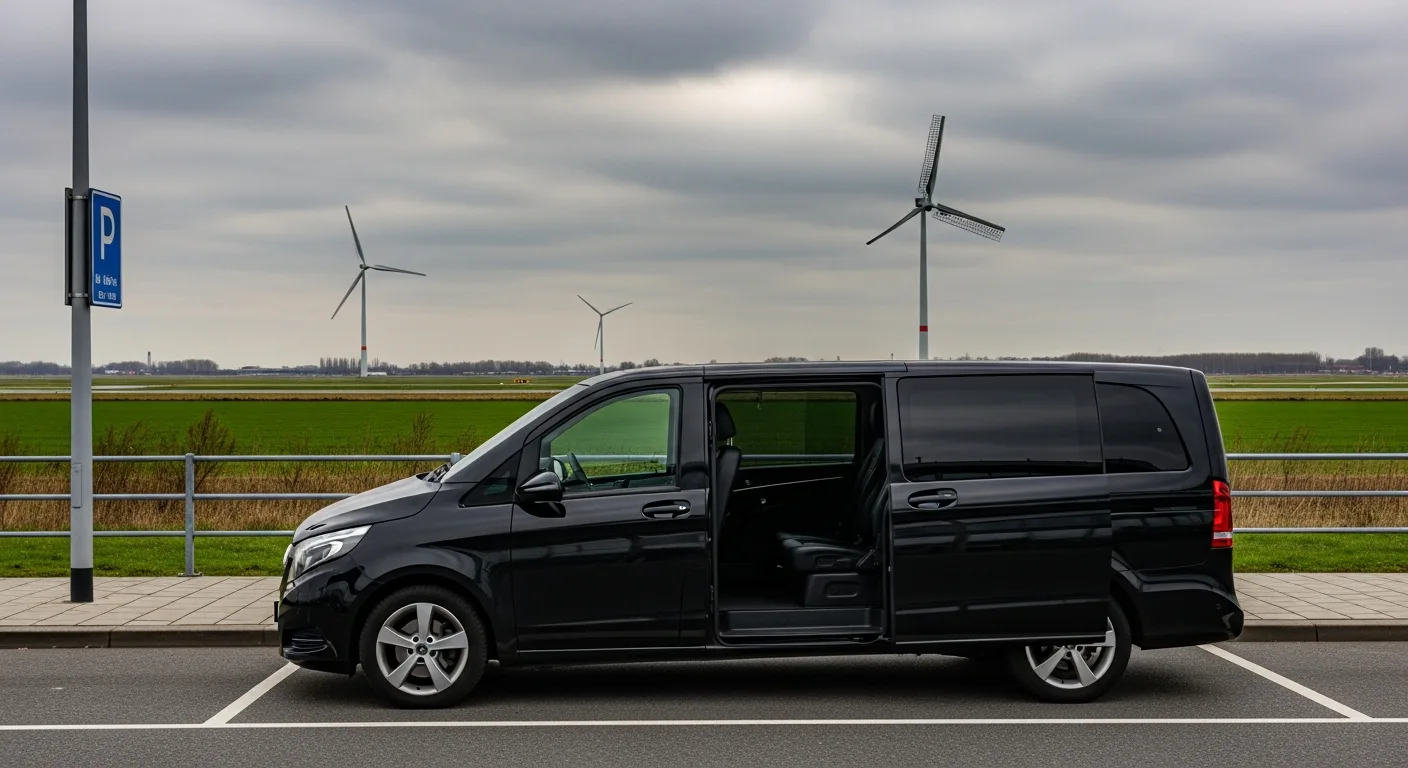
Schiphol has a clearly designated private hire pickup area, separate from the taxi rank and bus bays. This is located on the outer road of the arrivals forecourt, with separate lanes for different vehicle types. Drivers are not permitted to stop indefinitely in the immediate arrivals exit zone — they use the designated holding area.
The meet point for name board pickups at Schiphol is typically just inside the arrivals hall — at the barrier past the exit doors of whichever arrivals section is relevant. This is the most reliable coordination point before moving to the vehicle. Passengers using the meet and greet service experience this directly — driver is positioned inside, just past customs exit.
Pickup Coordination Steps at Schiphol
Non-Schengen arrivals must clear passport control and customs before exiting. This takes 20 to 45 minutes depending on queue volume and flight origin.
Schiphol signage directs arrivals to numbered exits. Follow the arrivals number corresponding to your pier — signage is clear and bilingual (Dutch/English).
Your driver will be holding a name board at the barrier just outside customs. Confirm their name and vehicle details before proceeding to the vehicle.
The driver leads you to the private hire staging area on the outer forecourt, separate from taxi and bus zones.
Schiphol Departure Dropoffs
Departures at Schiphol are on the upper level of the building. Check-in is centralized, making departure dropoffs more straightforward than at multi-terminal airports. The departure road runs along the front of the building. Peak morning hours (07:00–09:30) see the heaviest departure traffic; for these times, add buffer to your departure transfer timing in line with guidance on how timing affects the journey.
What Makes Schiphol Simpler Than Most Hubs
- No terminal specification required — just the arrivals exit number
- Single roadway system reduces driver repositioning complexity
- English signage throughout reduces navigation friction for international passengers
- Integrated rail (Intercity Direct, NS) and road access on the same campus simplifies logistics
- Meeting point (arrivals barrier) is consistent and clearly defined
To explore Transferhood directly, you can visit the main platform.