
Zurich Airport Transfer Planning Guide
Zurich Airport (ZRH) operates as a single integrated terminal with multiple piers, situated 12 km north of Zurich city center and connected to the A1 motorway. Switzerland's infrastructure precision means transfer timing at ZRH is more reliable than at most European airports — but structured planning still matters, particularly for extended journeys to Zug, Basel, or Geneva.
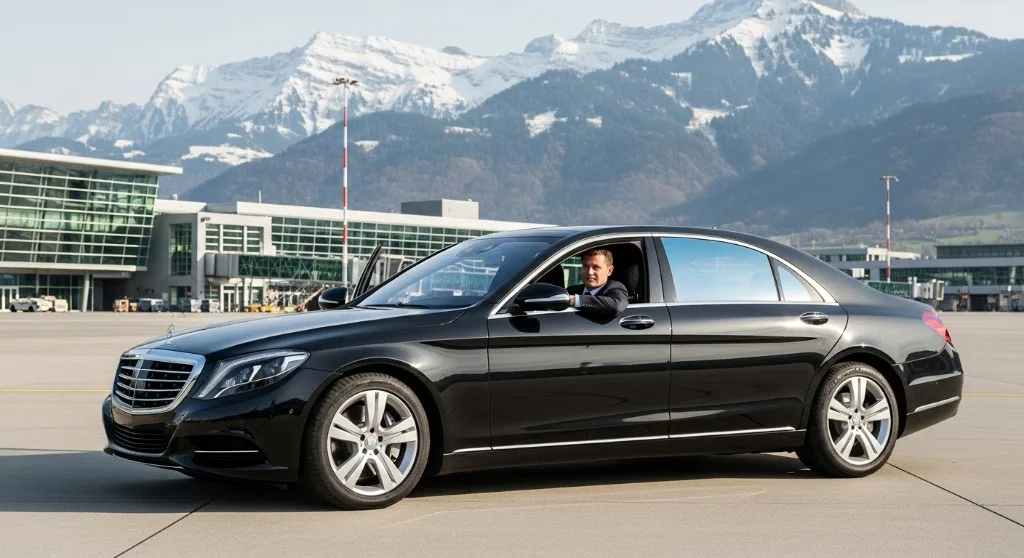
ZRH Terminal Structure and Pier Layout
Zurich Airport operates one integrated terminal building with three piers: Pier A (Schengen arrivals), Pier B (non-Schengen and charter arrivals), and Pier E (Schengen and some non-Schengen). All piers connect internally within the main terminal structure. Arrivals exit to a common ground-level meetup zone, making driver positioning at ZRH relatively straightforward compared to multi-terminal airports.
There is no ambiguity about which building passengers exit — the terminal has a single public arrivals hall accessible from all piers. However, for planning purposes, providing the flight details enables accurate timing of the driver's positioning window relative to the expected baggage claim and customs duration for that specific flight.
Destination Zones and Drive Times from ZRH
~12 km via A1 motorway exit and city approach roads. Journey time: 15–22 minutes off-peak. The A1 exit onto Schaffhauserstrasse and the approach to the lake are efficient outside peak hours. Rush-hour city approach: 30–45 min.
~14 km. Creative and tech sector district with modern hotels. Journey time: 18–28 minutes. Accessible via the city ring roads without passing through the Altstadt core.
~7 km — very close to the airport. Journey time: 10–16 minutes. Oerlikon is adjacent to the airport zone and hosts Messe Zurich exhibition center. One of the shortest ZRH transfer routes.
~3–5 km. Airport-adjacent accommodation zone for overnight layover travelers or early-morning departure stays. Journey time: 6–12 minutes. The most immediate ZRH hotel cluster.
~35 km south via A4 motorway. Journey time: 30–45 minutes. Zug is Switzerland's financial and corporate hub for fund management and holding companies — a frequent destination for finance-sector transfers from ZRH.
~90 km via A1/A2. Journey time: 60–80 minutes. Basel is a viable extended transfer from ZRH for passengers heading to the pharma cluster, Art Basel, or BIS/BIS-related institutions. Confirm routing and timing before booking.
A1 Motorway: Reliable but Not Immune to Peak Hours
The A1 is the primary motorway linking ZRH to Zurich city center and onward to Baden and Bern. The motorway segment from the airport to the city edge is short and normally efficient. The variable element is the city entry — particularly on the Schaffhauserstrasse and Escher-Wyss-Platz corridor during morning rush (07:30–09:00) and evening rush (17:00–18:30).
Switzerland's infrastructure reliability extends to transfer planning — ZRH is one of the more predictable European airports for transfer timing. Off-peak journeys run very close to the base time estimates. However, the morning rush entering Zurich from the north on the A1 corridor is a genuine congestion window that should not be ignored for departure transfers.
ZRH and Business Travel: Timing Discipline
Zurich is a global hub for banking, insurance, commodities trading, and professional services. A significant share of ZRH transfers are corporate — executives arriving for board meetings, fund managers connecting to Zug or Geneva, legal teams traveling to international arbitration proceedings. For these transfers, timing precision aligns with the ethos of the city itself.
Departure transfer pickup time planning for ZRH is typically more reliable than in larger cities, but early morning departures (before 07:00) still benefit from confirming the city-approach window. For late morning departures through the rush window, build 15–20 minutes of buffer over the base A1 drive time.
Planning Your ZRH Transfer
To explore Transferhood directly, you can visit the main platform.