Istanbul's Two Airportos
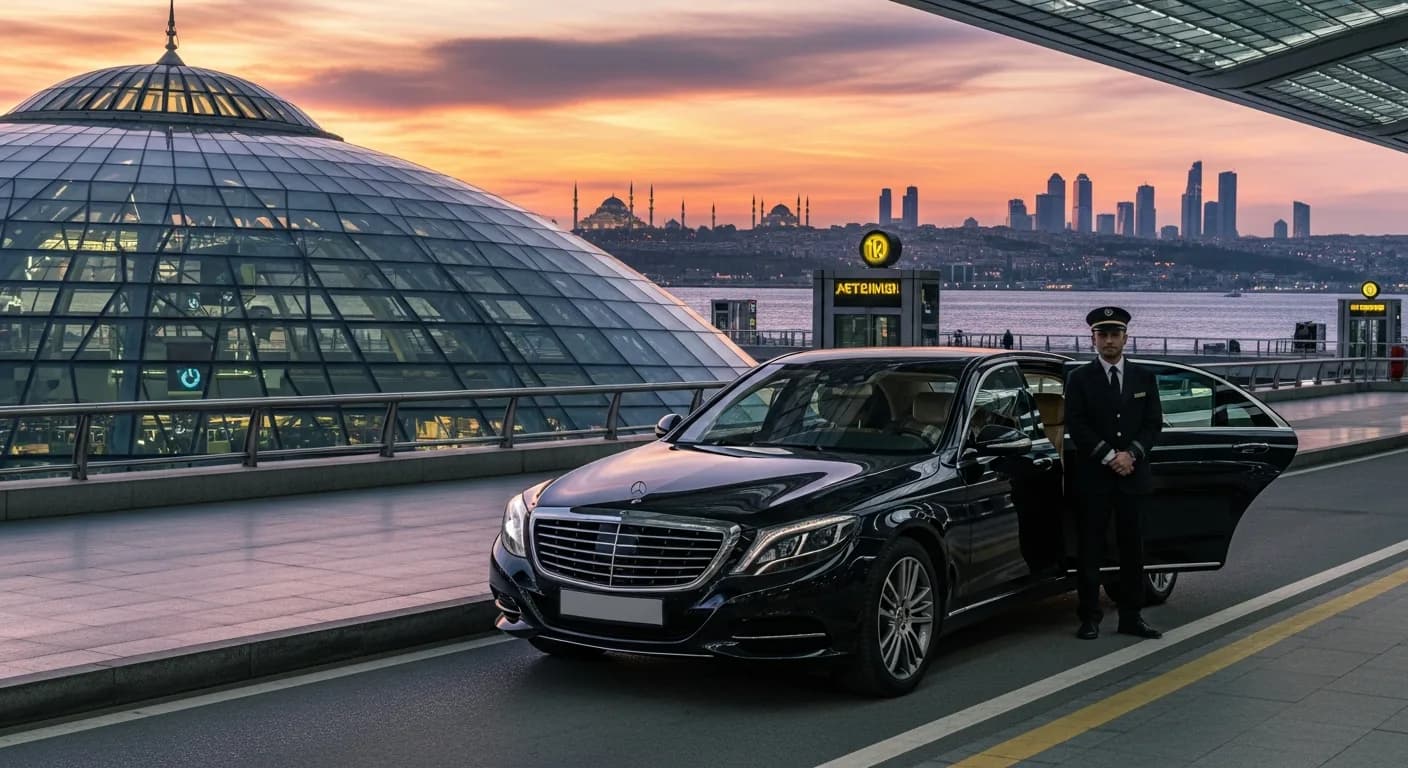
Istanbul is served by two international airportos on opposite sides of the city. Most lungo raggio and hub-carrier volos operate through Istanbul Airporto (IST) on the European side. Sabiha Gökçen Airporto (SAW) is on the Asian side and serves primarily low-cost carriers and domestic routes. Knowing which airporto you're arriving at or departing from is the starting point for any transfer plan — the route logic, timing, and destination overlap very little between the two.
Located on the northwestern European side of the city, approximately 35–45 km from central Istanbul districts. A single large terminal building handles both domestic and international operations. prelievos are organized at the arrivi level with designated zones for transfer privatos.
Positioned on the Asian side of Istanbul, around 45–55 km from the European center and 25–35 km from Asian residential and business districts. Primarily serves budget carriers and domestic connections. Its proximity to Asian neighborhoods makes it the practical choice for passeggeros staying on that side.
Key Percorsi e Tempi from IST
Istanbul Airporto sits at the far northwestern end of the European side. The main route into the city follows the Northern Marmara autostrada (O-7) and then the O-3 or TEM expressway toward central areas. Plan for the following rough windows — these are minimums under reasonable conditions and can increase significantly depending on when you travel:
- IST to Taksim / Beyoğlu: Plan for 45–75 minutes. During morning or evening ora di puntas, 90 minutes is not uncommon.
- IST to Sultanahmet / historic peninsula: Similar distance profile, 50–80 minutes. Routes through the centro citta' add congestion variables.
- IST to Şişli, Maslak, Levent (business districts): These areas are closer in the European direction — plan for 35–60 minutes.
- IST to Bosphorus-area hotels (Beşiktaş, Ortaköy, Bebek): 50–70 minutes, highly dependent on coastal road congestion.
- IST to Asian side destinations: This requires crossing the Bosphorus via the suspension bridges. During ora di puntas, bridge approaches can add 30–45 minutes. Plan a total of 75–120 minutes for Asian-side destinations from IST.
Istanbul's road network is one of the most congested in Europe during ora di puntas (roughly 07:30–10:00 and 17:00–20:00 on weekdays). Any transfer plan that doesn't account for a meaningful buffer risks being late. Always build in extra time, especially for morning partenze.
Key Routes from Sabiha Gökçen (SAW)
SAW connects much more efficiently to the Asian side and via the Osmangazi bridge corridor to Anatolian destinations. For passeggeros staying in European districts, the transfer involves either a bridge crossing or a ferry connection and becomes significantly longer.
- SAW to Kadıköy, Üsküdar, Bostancı (Asian center): Plan for 30–55 minutes depending on D-100 and E-5 autostrada traffic.
- SAW to Anadolu Yakası business districts (Ataşehir, Ümraniye): 25–45 minutes.
- SAW to European center (Taksim, Sultanahmet): Requires bridge crossing — plan for 60–100 minutes depending on time of day.
Traffic: The Critical Variable in Istanbul
Istanbul consistently ranks among the most congested cities globally. Traffic conditions on main arteries, bridge approaches, and city-center routes can vary dramatically between fuori ora di punta and peak periods. A journey that takes 40 minutes at 02:00 may take 90 minutes at 08:30. This is not an occasional exception — it is a structural feature of Istanbul's road network.
When selecting your orario di prelievo, always account for realistic peak-hour durations, not best-case scenarios. For partenze, the general guidance is to add at least 30–45 minutes to the estimated tempo di percorrenza during any weekday morning or late-afternoon window.
terminal Coordination at IST
Istanbul Airporto operates as a terminal unico building, but the internal layout is large. International arrivi and domestic uscita arrivi at different gates within the same structure. When your autista is confirmed, they will typically position at the area arrivi with a cartello con il nome. Understanding how airporto prelievo operations work — including where the autista waits and what happens if there's a delay — is part of using a professional transfer service effectively.
If your inbound volo is delayed, a professional transfer service will monitor your volo status and adjust the autista's schedule accordingly. Providing your numero di volo at prenotazione is what enables this — without it, the autista cannot be repositioned based on actual orario di arrivo.
Cosa Specificare al Momento della Prenotazione an Istanbul Transfer
The route, timing, and logistical setup differ entirely between the two. Specify clearly — do not rely on the city name alone.
Istanbul neighborhoods can be far apart even within the same broad area. "Istanbul hotel" is not enough. Provide the full address, including the district (e.g., Beyoğlu, Kadıköy, Maslak).
Enables real-time volo monitoring and autista positioning adjustment. Essential for arrivi. Review the importoance of dettagli sul volo e sul terminal before prenotazione.
Istanbul traffic makes veicolo changes after prenotazione impractical. Specify correctly at the time of reservation, especially for groups or heavy bagagli.
If you have a connecting volo, a meeting, or a strict check-in window, communicate this during prenotazione. It affects whether the autista needs an early prelievo buffer or a specific route plan.
Cross-City Routes: European to Asian Side
A notable complexity in Istanbul transfers is any route that crosses the Bosphorus. There are three bridge crossings available, but all are subject to congestion during ora di puntas. passeggeros transferring from IST to Asian-side hotels, or from SAW to European-center destinations, should treat this as a higher-uncertainty journey. prima mattina and tarda notte crossings are significantly faster. Mid-day and rush-hour bridge approaches can be unpredictable.
For these routes, the orario di prelievo discussion with your transfer provider matters more than on a straightforward single-side journey. The veicolo and route selection for cross-city Istanbul transfers should be reviewed in the context of your full arrival and partenza transfer schedule.
To explore Transferhood directly, you can visit the main platform.