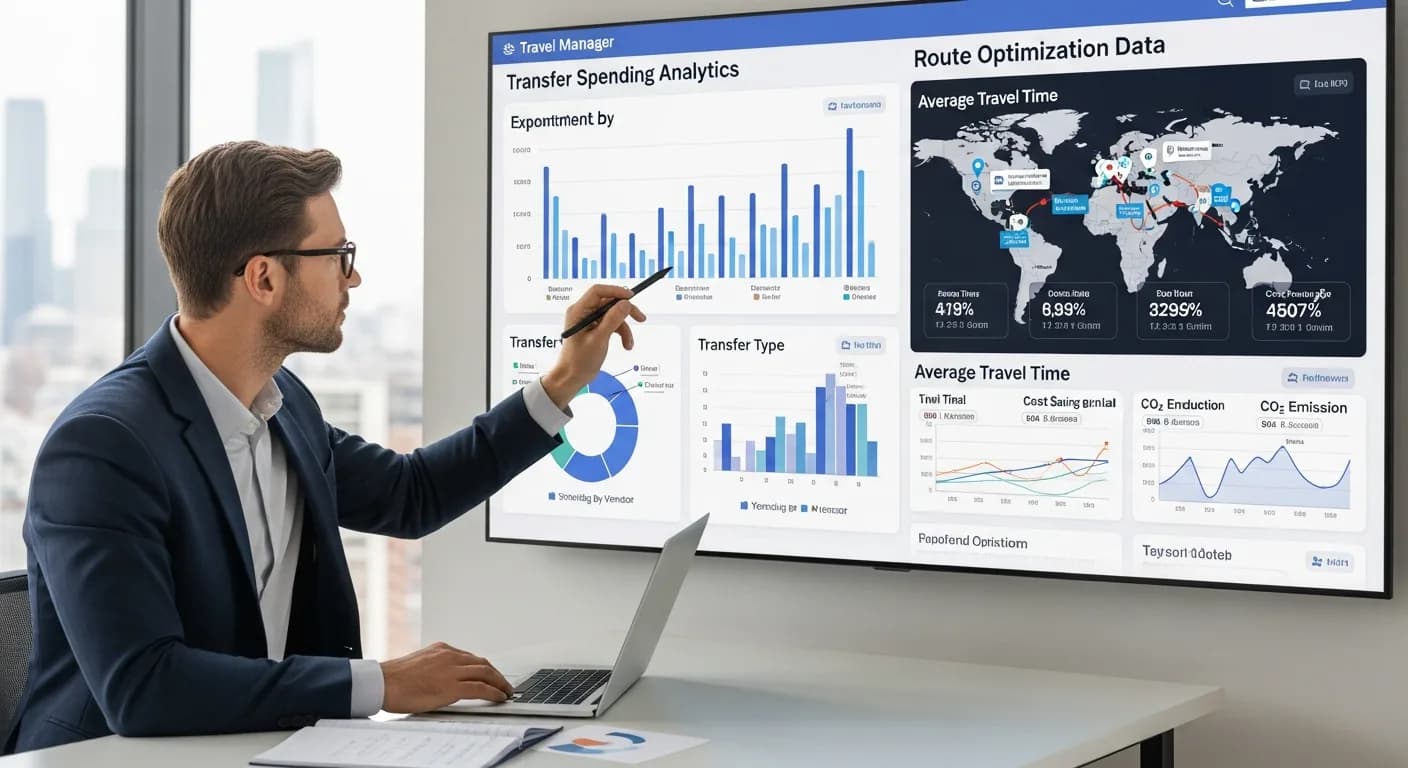
Why Transfer Data Is Underused
Most corporate travel programs analyze air and hotel spend in detail but treat ground transporto as background noise. The aggregate is visible (total ground transporto expense), but the components — which routes, which categorie di veicolo, which departments, at what lead times — are not. This makes optimization guesswork.
The prerequisite for using transfer data is collecting it systematically. Ad-hoc prenotaziones and personal expense reimbursements produce no usable data. Only centralized prenotazione through a platform with consistent data fields creates the foundation for analysis. This is the core argument for invoice visibility as a program management tool, not just a finance requirement.
What the Data Reveals
Which routes represent the majority of your transfer volume? In most programs, 20% of routes account for 60–70% of spend. These are your negotiation targets — high-frequency routes with predictable volume where contracted rates deliver immediate savings.
Are employees consistently prenotazione executive veicolos for routes and trip types where a berlina standard would be appropriate? veicolo class is often the biggest cost lever in a transfer program — a 30–40% price difference between classes on the same route is common.
Transfers booked within 4 hours of prelievo typically cost 25–50% more than those booked 24+ hours ahead. If your data shows a high proportoion of late prenotaziones, the primary intervention is policy (require advance prenotazione) not supplier negotiation.
Cost per transfer varies significantly across departments in most programs — not because the routes differ, but because prenotazione behavior differs. Identifying high-cost departments creates targeted conversations rather than organization-wide policy overhauls.
prenotaziones cancelled within the no-fee window represent zero cost. cancellaziones within the charge window represent waste. The frequency of late cancellaziones is a process signal — it suggests transfers are being booked speculatively rather than as confirmed travel.
The Four Analytical Questions Worth Answering
Benchmark your top routes against market rates and against your own historical trend. Consistent overperformance against market suggests either over-specification or missed negotiation opportounity.
If 60% of prenotaziones are in the executive class but your policy only requires it for senior roles, there's a compliance gap — not a pricing problem.
Plot the distribution of hours between prenotazione and transfer. A right-skewed distribution (many all'ultimo minuto prenotaziones) indicates a behavioral pattern that can be addressed with policy and process changes.
Per-transfer cost by cost center, not total spend. A high-travel department may have low per-trip cost because they've optimized their prenotazione behavior. A low-travel department may have high per-trip cost because each prenotazione is ad-hoc.
Turning Analysis into Savings
Data reveals the problem; policy and platform configuration solve it. Analysis that doesn't lead to a specific change — a new prenotazione rule, a veicolo class restriction, a negotiated rate on a top route — is not optimization. It's reportoing.
After analysis, the typical intervention sequence is: first, enforce veicolo class policy through the prenotazione system (so employees can't self-select upgrades); second, negotiate contracted rates on high-frequency routes; third, add prenotazione lead time minimums for standard trips. Each intervention compounds on the previous one.
Ongoing expense code tracking at the transfer level, combined with structured flussi di approvazione for higher-cost prenotaziones, creates the conditions for transfer spend that is visible, controlled, and continuously improvable.
To explore Transferhood directly, you can visit the main platform.