The Two Scenarios Where This Happens
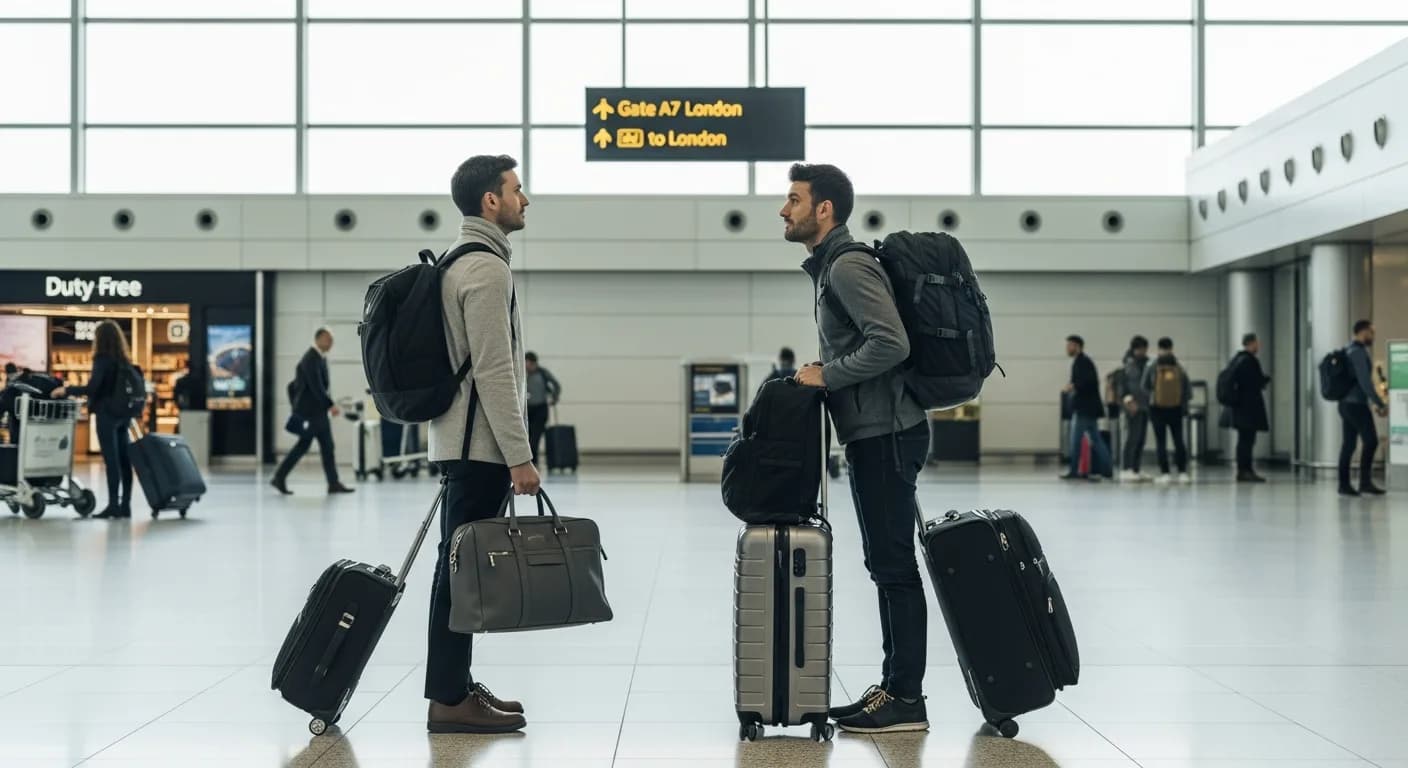
There are two primary scenarios where a autista cannot reach a passeggero. The first is an arrival transfer where the passeggero exits the terminal late, goes to the wrong exit, or has connectivity issues on landing. The second is a partenza transfer where the passeggero is not ready at the specified address at the agreed time. Both scenarios trigger a contact protocol, but the operational response differs in urgency and consequence.
Understanding how airporto prelievo operations are structured clarifies why autista positioning and passeggero contact are coordinated parts of the same system, not independent actions.
The Contact Protocol: Step by Step
For arrival transfers: the autista is at the designated meeting point with cartello con il nome. For Transfer in Partenza: the autista is at the prelievo address at the agreed time. In both cases, the autista does not immediately contact the passeggero — a reasonable positioning window is allowed first.
If the passeggero has not appeared within the expected window, the autista calls the phone number registered on the reservation. This is the primary contact channel and should be answered.
If the call is unanswered, an SMS message is sent to the same number. This provides a text record of the contact attempt and allows the passeggero to respond when connectivity is restored.
If both contact attempts fail within a defined window, the autista notifies the operations team. Depending on the prenotazione type, the operations team may attempt contact via an alternative number (if provided) or the prenotazione company.
If the full complimentary wait period expires with no contact and no passeggero, the reservation is marked accordingly. The autista is released for other assignments. The prenotazione record reflects the full contact attempt history.
How Long the autista Waits
The complimentary wait period differs by transfer type. For arrival transfers, the standard window is measured from the actual landing time — typically 45 to 60 minutes for international volos. This accounts for variable ritiro bagagli and controllo passaportoi processing times. For Transfer in Partenza, the wait window is shorter — typically 10 to 15 minutes from the agreed orario di prelievo — because the passeggero's readiness is within their control.
The full mechanics of these wait windows are covered in the guide on how tempo di attesa works in transfer aeroportouales. Understanding the window structure helps travelers know how much flexibility they have before the service is at risk.
The wait window is not a soft guideline — it is a defined period after which the autista may be legitimately released. A passeggero who exits the terminal 75 minutes after landing on a service with a 60-minute wait window may find the autista has left. The wait window is designed to be generous, but it is not unlimited.
passeggero Responsibilities in Remaining Reachable
The contact protocol only works if the phone number on the reservation is reachable at the time of prelievo. Common failure points include:
- International travelers with roaming disabled — phone rings but does not connect
- Phone on airplane mode after landing, not switched back to normal
- SIM card replaced with a local SIM that doesn't match the number on file
- Phone dead or charging in bag, not accessible in the area arrivi
- Number entered incorrectly at the time of prenotazione
These are the passeggero's operational responsibilities. The service system cannot compensate for a phone number that does not receive calls. passeggeros traveling internationally should confirm that the number on their reservation is reachable upon landing before partenza.
Corporate prenotaziones: Secondary Contact Options
For transfer aziendale reservations, it is operationally useful to have a secondary contact available — typically the responsabile viaggi, executive assistant, or the person who made the prenotazione. If the traveler cannot be reached directly, an alternative escalation path exists. This is particularly valuable when senior executives or external guests are being transportoed, where a failed transfer has reputational as well as logistical consequences.
What Happens If the numero di volo Was Wrong
If a passeggero travels on a different volo than the one registered in the prenotazione, the autista's positioning is based on the wrong volo's landing time. The autista may be at the terminal before the passeggero lands, or may have already departed by the time the passeggero exits. In this scenario, the passeggero contacting the operations team directly is the fastest resolution path.
Providing accurate numero di volo and terminal details at prenotazione, and updating the reservation if volo plans change, is the most effective way to prevent this situation. An incorrect numero di volo in the prenotazione is one of the few scenarios where the service's automated systems cannot self-correct, because they are monitoring the wrong reference point entirely.
To explore Transferhood directly, you can visit the main platform.