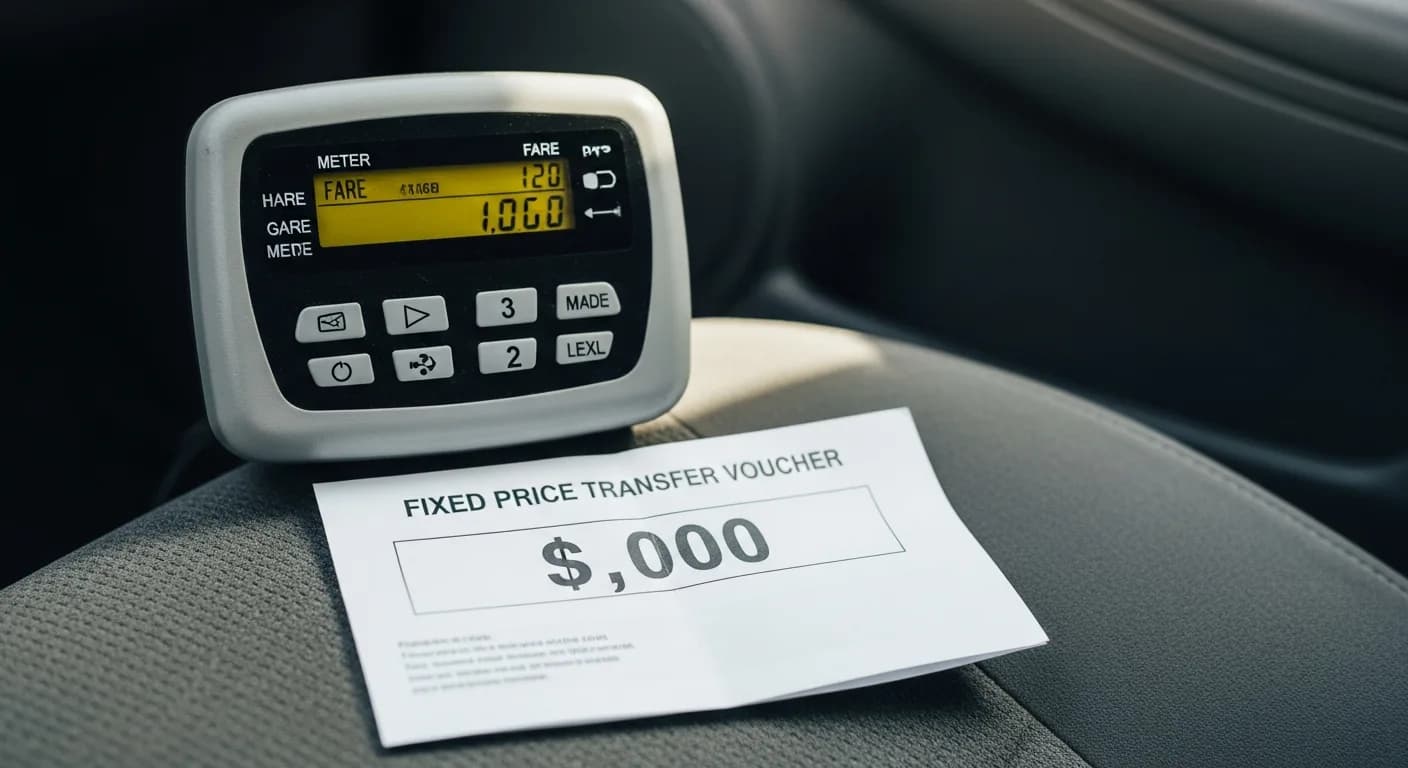
Defining Each Model
Understanding transfer aeroportouale pricing starts with recognizing which model a service uses. prezzo fisso transfers calculate the total cost before the journey begins. The passeggero confirms a specific amount at checkout, and that amount is charged regardless of what happens during the trip — traffic delays, longer routing, or extended tempo di viaggio do not alter the price.
Variable-price models — which include metered taxis and many on-demand ride services — accumulate cost during the journey. The meter runs based on distance traveled and time elapsed. The final charge is only known when the veicolo reaches the destination.
Side-by-Side ComParigion
Price is calculated and confirmed before the journey. All declared inputs — route, veicolo, timing, numero di passeggeri — are incorporated into a single confirmed figure. No adjustments for traffic, journey duration, or routing during the trip.
Price accumulates during the journey based on distance and time. Final cost depends on real-world conditions: congestion, detours, waiting at traffic. The amount at destination may differ significantly from any initial estimate.
Full cost is known before travel. Can be included in expense reportos, trip budgets, or approval workflows at prenotazione time.
Estimates at prenotazione are not commitments. ora di punta conditions, route changes, or longer wait times can produce a final charge well above initial estimates.
Because the autista's fee is not affected by journey duration, there is no structural incentive for slower or longer routing.
Metered models can create ambiguity around routing choices, particularly during high-demand periods when demand-based pricing multipliers may apply.
The Operational Case for Fixed Pricing on prenotare in anticipoed Transfers
prenotare in anticipoed transfer aeroportouales are fundamentally a planned service. The route, time, and passeggero details are known in anticipo. Fixed pricing is the natural model for planned services — it converts a known set of inputs into a known output, which is the price. The planning value is lost if the final cost is only known after the trip ends.
Fixed pricing does not mean lower pricing. It means confirmed pricing. The figure may be higher or lower than a variable service depending on conditions — what it guarantees is that the figure does not change after prenotazione.
When Variable Pricing Appears More Attractive
In low-traffic, short-distance scenarios, a metered service may produce a lower final cost than a fixed prenotare in anticipoed transfer. This is because fixed pricing must account for a range of operational scenarios when setting the rate — it cannot assume ideal traffic conditions. A metered trip under perfect conditions may come in cheaper.
However, this cost advantage is not predictable at prenotazione time. The traveler cannot know in anticipo whether conditions will be favorable. Fixed pricing trades the possibility of a lower-than-expected cost for the certainty that the cost will not be higher-than-expected.
Implications for the Factors That Drive Price
In a prezzo fisso model, the variables that affect cost are entirely the inputs declared at prenotazione: route, categoria di veicolo, time of day, bagagli, and any declared stops. These are covered in detail in the breakdown of factors affecting transfer prices. Once those inputs are confirmed, no subsequent conditions change the price.
In a variable model, operational conditions during the journey — which the traveler cannot control — become pricing inputs. Traffic, detours, and tempo di percorrenza all affect the final cost.
Why prenotazione anticipata Reinforces the prezzo fisso Advantage
The advantages of fixed pricing are most relevant when a transfer is booked in anticipo. When prenotazione hours or days ahead of a volo, a traveler who receives a confirmed price can include that cost in their itinerary, travel authorization, or expense system without revisiting it. This is one of the core reasons why prenotazione anticipata improves travel operationally — not just for convenience, but for cost management.
To explore Transferhood directly, you can visit the main platform.