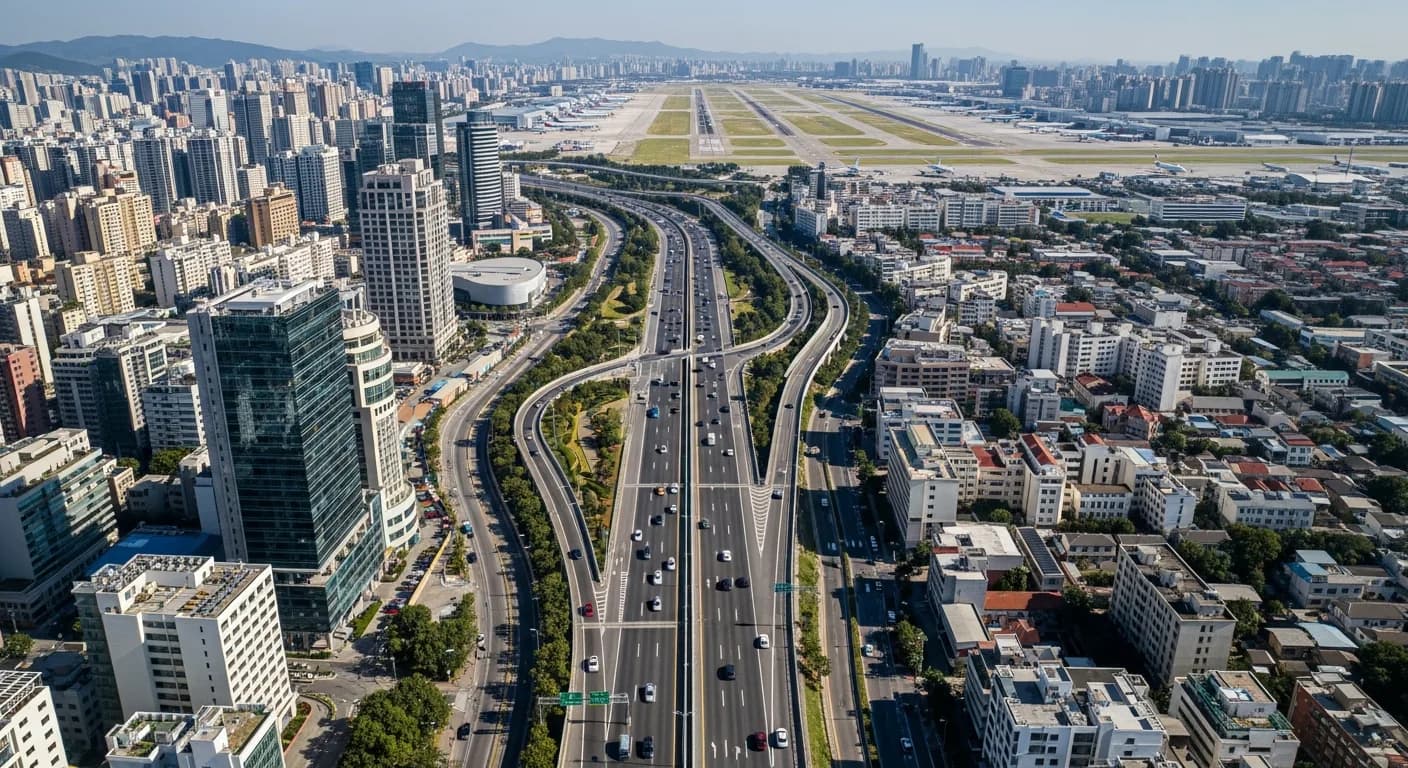
1. Route Distance
Route distance is the primary autista of transfer cost. It is calculated based on road distance between the prelievo and destinaziones — not straight-line distance. Longer routes cost more because they involve more autista time, fuel, and veicolo wear. A transfer from an airporto 45 km from the city will naturally cost more than one from an airporto 18 km away, all else being equal.
Route distance also interacts with geographic complexity: routes that pass through autostrada a pedaggios, tunnel access zones, or airporto transit corridors may carry additional fixed costs that are incorporated into the base price. For a full picture of how these elements combine, see the explanation of transfer aeroportouale pricing.
2. categoria di veicolo
The categoria di veicolo you select applies a rate multiplier to the base route cost. Economy veicolos carry the lowest rate. Berlina Comforts, SUVs, and Monovolumes apply progressively higher multipliers that reflect their capacity, fuel consumption, and operational positioning cost.
Choosing a larger veicolo than required for your group size or volume dei bagagli will result in a higher price without a corresponding benefit. Conversely, selecting a smaller veicolo that does not fit your actual bagagli or numero di passeggeri creates operational problems that often require re-prenotazione.
3. Time of Day and Night Surcharges
Transfers booked during fuori ora di punta hours — typically tarda notte and prima mattina windows — carry a time-based surcharge. This reflects the higher operational cost of deploying autistas and veicolos during those hours. The surcharge is applied at the prenotazione stage, so the price you see at checkout already accounts for a 03:00 prelievo, for example.
Night surcharge windows vary by operator and market, but common thresholds are prelievos between 22:00 and 06:00. Always check the exact surcharge policy when prenotazione a very early or very late transfer.
4. prelievo Zone Classification
Airportos are divided into operational zones — terminal curbside, area arrivi, car park levels, remote zones. Where a veicolo is expected to wait and pick up a passeggero affects the operational cost. Premium prelievo zones (private terminals, VIP gates, certain covered car parks) carry an access cost that is reflected in the price.
Similarly, if your prelievo origin is a residential address in a city that requires low-emission zone access fees or congestion charges, those may be incorporated as fixed location supplements.
5. numero di bagagli and Volume
Declared numero di bagagli affects which categoria di veicolo is operationally suitable. When the declared volume dei bagagli exceeds the capacity of the default veicolo for that numero di passeggeri, the system may automatically upgrade the categoria di veicolo or flag an incompatibility. Either outcome changes the price.
Accurate bagagli declaration is therefore both an operational and a pricing input. Understating bagagli at prenotazione and then arriving with more bags creates problems at prelievo that may require a veicolo substitution — often at short notice and at higher cost.
6. tempo di attesa Beyond the Complimentary Period
Most structured transfer services include a complimentary waiting period — typically 45 to 60 minutes for international arrivi to account for customs and baggage. Waiting beyond this window may incur per-minute or per-15-minute charges depending on the operator's policy.
This is distinct from volo delay handling: volo delays tracked automatically by the system do not generate tempo di attesa charges, because the autista's orario di arrivo is adjusted to match the actual landing time. The charge applies to passeggero-caused delays after the autista has already arrived at the confirmed punto di prelievo.
7. Multi-Stop Complexity
Transfers with more than one stop — for example, airporto to hotel A, then hotel B — carry a higher price than a direct point-to-point transfer. Each declared stop adds distance and autista time to the route calculation. Undeclared stops requested during the journey may be accommodated at the autista's discretion but are generally not guaranteed, and their cost implications are not included in the original prenotazione price.
How These Factors Interact
No single factor operates in isolation. A nighttime prelievo on a long route with a large veicolo produces a significantly higher price than a daytime prelievo on the same route with an Berlina Economy. The interaction between these variables is what explains why similar routes can have different prices. When reviewing a quoted price, the relevant question is not "why is this expensive?" but "which combination of inputs produced this figure?"
What Is Not a Pricing Factor
In a prezzo fisso transfer model, traffic conditions, journey duration, and routing variations during the trip are not pricing factors. The price does not increase because the autista took a longer path or encountered congestion. This is a core distinction between structured prenotazione anticipata and metered on-demand services. For more on this distinction, the comParigion between fixed vs variable pricing explains the operational difference in detail.
To explore Transferhood directly, you can visit the main platform.