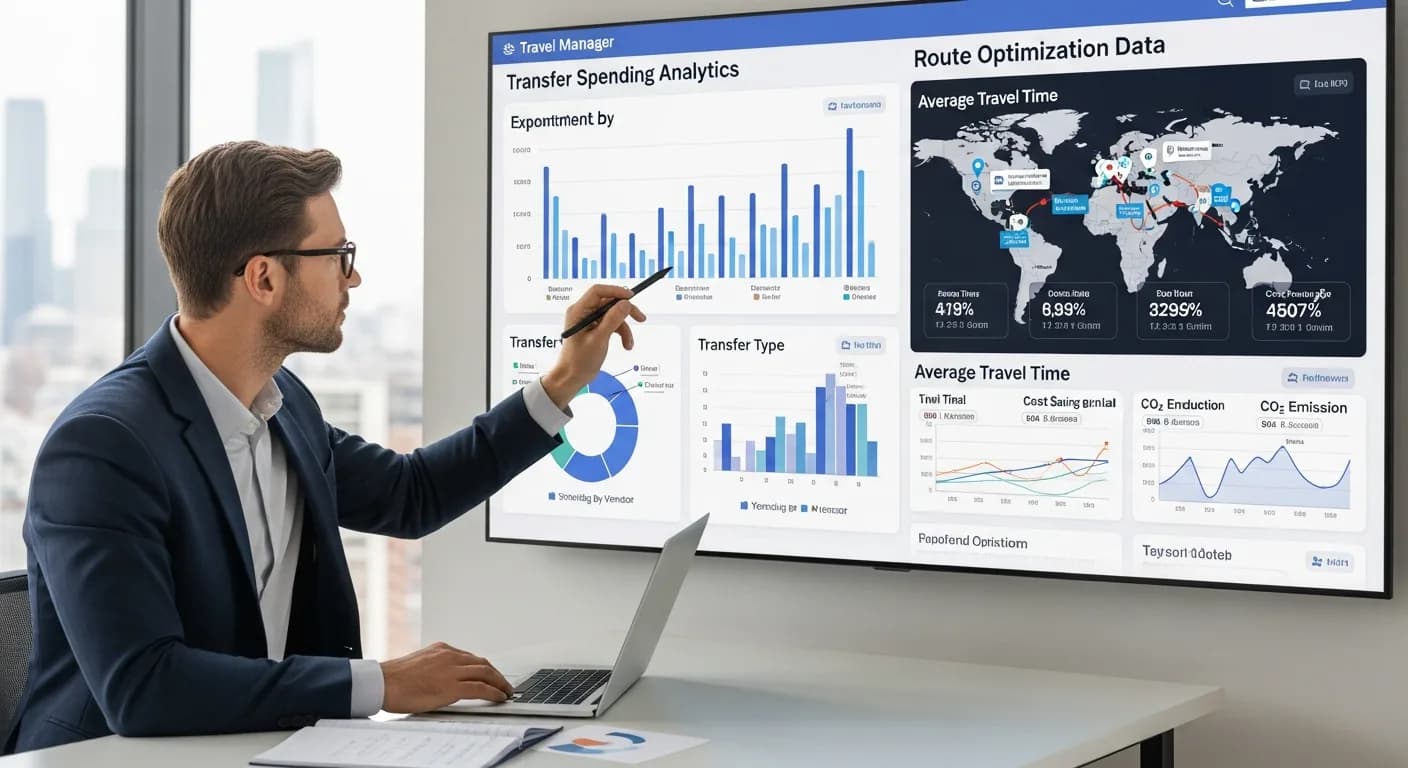
What Ad-Hoc Booking Looks Like at Scale
A single ad-hoc transfer booking is not a problem. An employee downloads an app, books a ride to the airport, and files a receipt. Thirty minutes of total process time, manageable. Now multiply that by one hundred transfers per month across a twelve-person travel team. Each booking uses a different platform. Pricing varies unpredictably. Some employees use premium vehicles habitually. Some forget to submit receipts. Finance spends three days per month reconciling transfer charges from multiple card statements, apps, and invoice formats. No aggregate view of spend exists until long after decisions could have changed it.
This is the compounding cost of informal travel management. It is not dramatic — no single booking causes a major problem. But the accumulated overhead, inconsistency, and opacity make the entire function harder to manage than it needs to be. The corporate transfer booking model exists precisely to replace this with something that operates predictably at volume.
The Four Inefficiencies of Ad-Hoc Transfer Booking
Without a defined vehicle policy, travelers self-select based on personal preference. Some choose economy consistently; others default to premium. The company has no visibility into whether vehicle selection reflects the actual trip type.
Ad-hoc bookings on dynamic platforms mean the same route may cost 30–50% more at peak times compared to pre-booked fixed-rate transfers. Over a year of frequent travel, this variability represents significant unmanaged cost.
Without centralized records, there is no data on how much the organization spends on transfers by route, department, or employee class. Budget planning for travel relies on estimates rather than actuals.
Receipts arrive from multiple platforms, in multiple formats, submitted by employees at varying intervals. Finance cannot produce a clean transfer spend report without manually aggregating and normalizing data from many sources.
What a Structured System Provides Instead
A structured corporate transfer system does not eliminate all of these issues entirely — pricing still varies by route and vehicle category, and some complexity remains in large group or multi-city arrangements. What it does is remove the unnecessary complexity: the process overhead, the data gaps, the inconsistency in vehicle selection, and the invoice fragmentation that results from having no system at all.
- Pre-booked fixed-price transfers replace demand-surge variability on routine routes
- Vehicle policy is enforced by the booking system rather than left to individual judgment
- Every booking generates an attributed financial record automatically
- Finance sees aggregate transfer spend in real time, not three weeks later
The argument for a structured transfer system is not that informal booking never works — it is that informal booking does not scale. Organizations that travel heavily without a system are paying more than they would need to, managing more than they should have to, and seeing less than they need to in order to manage costs effectively.
Repeatability as the Primary Operational Value
For frequent travelers, the most tangible benefit of a structured system is repeatability. When the same employee travels the same route — say, monthly from their office to an international airport — a structured system means the booking takes two minutes, the vehicle is as expected, the confirmation arrives reliably, and nothing needs to be figured out on the day. There is a measurable quality-of-travel-experience benefit here, but the operational value is primarily about removing cognitive load from both the traveler and the travel manager.
How this experience translates into tangible advantages for the people who travel most is covered in more detail in the analysis of how frequent travelers benefit from structured transfer arrangements.
Cost Predictability as a Planning Tool
One underappreciated benefit of structured transfer systems is the ability to forecast travel costs accurately. When all transfers are pre-booked at fixed prices through a centralized account, finance can project what the next quarter's transfer spend will be based on booked trips and historical patterns. This is not possible when bookings happen informally and prices fluctuate.
Budget planning for corporate travel is always approximate, but the degree of approximation is significantly reduced when the input data — route frequencies, vehicle categories, booking volumes — is structured and accessible. The full cost management framework that makes this practical is described in the guide to corporate transfer cost control.
When to Transition From Ad-Hoc to Structured
The right time to move from informal to structured transfer management is not when things break down — it is before they do. Common indicators that the transition is overdue:
- Finance spends more than a few hours per month reconciling transfer charges
- Travel spend reports cannot distinguish transfer costs from other transport categories
- Different departments use entirely different booking methods with no shared record
- Employees regularly choose vehicle categories that do not match their trip type or role
- The organization has no aggregate view of what it spends on airport transfers annually
Any one of these is sufficient reason to evaluate a structured system. All five together indicate that the overhead of the informal approach is already measurable and growing.
To explore Transferhood directly, you can visit the main platform.